The tune was composed by John Gow (1764-1826), one of the sons of the famous fiddler Niel Gow. John moved from Scotland to London and with his brother Andrew established a publishing firm, becoming the English distributor of the Gow family publications.
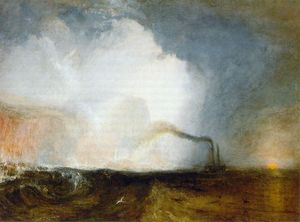
Fingal's Cave is a 230 ft. deep cave on the island of Staffa on west coast of Scotland near the islands of Mull and Iona. It is a sea cave carved from Tertiary basalt lava flows that have cooled to form hexagonal columns similar to those of the Giants Causeway in Northern Ireland. A path on one side of the cave travels from column to column back into the cave that stretches 250 feet into the rock, with a height of 70 feet above sea level. It has been the subject of painters and musicians. Watercolor painter John Turner painted Fingal's Cave in 1832.
Curiously, the cave has no real associations with Fingal which usually refers to the Irish hero king Fionn mac Cumhail who, like King Arthur, sleeps in a cave, to awake one day and defend Ireland in the hour of her greatest need.
John Purser explains that the original name of the main cave is, in Scots Gaelic, Uamh Bhin, meaning a musical or sweet-sounding cave.
The tune was printed in Carlin's The Gow Collection (1986), Gow's Complete Repository, Part 2 (1802) and John Gow's A Favorite Collection of Slow Airs, Strathspeys and Reels (c. 1804).
It was recorded by Abby Newton on Castles, Kirks and Caves (2001).