It was recorded under the title "Pike's Peak" in 1933 by fiddler Ted Sharp and his band, It had previously been recorded in 1930 by Clark and Luches Kessinger under the title "Rat Cheese Under the Hill" (a corruption of the tune name "Natchez Under the Hill"). Some fiddlers may have difficulty going into position playing for some measures of the B part.
The "Prosperity Special" name for the tune comes from Texas fiddler and band leader Bob Wills' 1938 recording (later recorded by Clarence "Tater" Tate under that title).
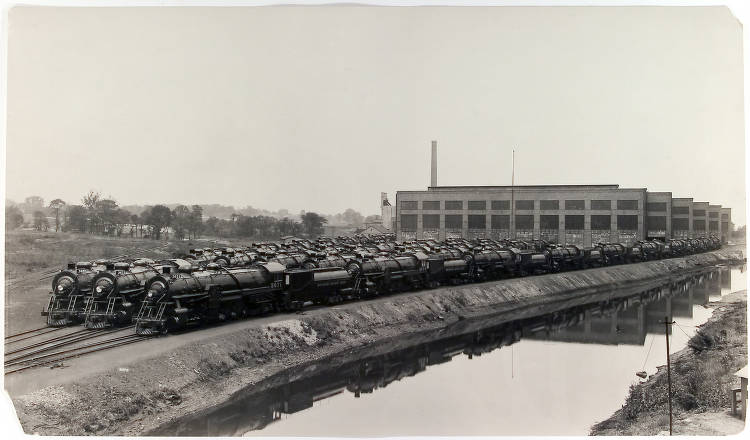
The title commemorates a unique event early in the 1920's. The Prosperity Special was a train made up entirely of locomotives. Early in 1921 during a post-war recession, the West Coast based Southern Pacific Co. placed an order for fifty heavy duty 2-10-2 locomotives with the Baldwin Locomotive Works in Eddystone, Pennsylvania. It was a leap of faith in a poor economy, but the unprecedented order helped stir optimism and faith that the American worker would prevail. The locomotives were completed in 1922 and in May of that year half the locomotives were shipped in an almost half-mile long train in a southern route to California. The entire train of twenty weighed in excess of 6,000 tons. A large sign on the lead locomotive read "The Prosperity Special." Six helper engines were necessary to move the train around the Horseshoe Curve in the mountains west of Altoona. The train departed on May 22nd 1922 from Eddystone, traveled to St. Louis on the Pennsylvania Railroad, then via the St. Louis Southwestern Railway to Corsicana, Texas. From there the train moved via the Southern Pacific to Los Angeles, where it arrived in June 1922.
The banjo tablature is by John Letscher who says that it is "Very similar to 'Natchez Under the Hill' and sounds closely relate to Jim Taylor's version of 'Step To the Music Johnny'".
It was printed in Beisswenger & McCann's Ozarks Fiddle Music (2008), Johnson's Kitchen Musician No. 2: Old-Timey Fiddle Tunes (1982) (revised 1988 & 2003), Lamancusa's The Gettysburg Collection of Old-Time Fiddle Tunes (2021), Orme's Herman Johnson Master Fiddler: 39 Solos (1999), Phillips' Fiddle Case Tunebook: Old Time Southern (1989) and Traditional American Fiddle Tunes, vol. 1 (1994), Silberberg's Fiddle Tunes I Learned at the Tractor Tavern (2002) and Songer's Portland Collection (1997).
It was recorded by The Kessinger Brothers (1930) (78 RPM) and The Kessinger Brothers: Complete Recordings in Chronological Order,1929 (1997), Ted Sharp on Old-Time Fiddle Classics, vol. 2 (1973), Sharp, Hinman & Sharp on Old Time String Band Classics (1975) and Times Ain't Like They Used to be Vol. 7: Early American Rural Music Classic Recordings of 1920'S and 1930's (2003) and Ron Kane & Skip Gorman on Powder River (1993).