|
Child Ballads |
|
| Child # | Child Title | Tunebook Title |
| 1 | Riddles Wisely Expounded | The Devil's Nine Questions |
| 2 | The Elfin Knight (Scarborough Fair) | Scarborough Fair |
| 3 | The False Knight Upon the Road | The False Knight Upon the Road |
| 4 | Lady Isabel and the Elf Knight | Lady Isabel |
| 7 | Earl Brand | Earl Brand |
| 10 | The Twa Sisters | The Two Sisters (Wind and Rain) The Two Sisters (Bow Down) |
| 11 | The Cruel Brother | The Cruel Brother |
| 12 | Lord Randall | Lord Randall |
| 13 | Edward | Edward |
| 14 | Babylon or The Bonnie Banks o' Fordie | Three Young Ladies |
| 16 | Sheath and Knife | Sheath and Knife |
| 18 | Sir Lionel | Old Bangum |
| 20 | The Cruel Mother | The Cruel Mother |
| 26 | The Three Ravens | The Twa Corbies |
| 30 | Lord Lovell | Lord Lovell |
| 32 | King Henry | King Henry |
| 35 | Allison Gross | Allison Gross |
| 44 | The Two Magicians | The Two Magicians |
| 46 | Captain Wedderburns Courtship | Captain Wedderburn's Courtship |
| 49 | The Two Brothers | The Two Brothers |
| 51 | Lizzie Wan | Lizzie Wan |
| 53 | Young Beichan | Lord Bateman |
| 54 | The Cherry-Tree Carol | The Cherry-Tree Carol |
| 56 | Dives and Lazarus | Dives and Lazarus |
| 68 | Young Hunting | Young Hunting |
| 73 | Lord Thomas and Annet | Lord Thomas |
| 74 | Fair Margaret and Sweet William | Fair Margaret and Sweet William Lady Margaret |
| 75 | Lord Lovell | Lord Lovell |
| 76 | Lord Gregory | The Lass of Loch Royal |
| 78 | The Unquiet Grave | The Unquiet Grave |
| 79 | The Wife of Usher's Well | Lady Gay |
| 81 | Little Musgrave and Lady Barnard | Mattie Groves |
| 84 | Bonny Barbara Allen | Barbara Allen (1) Barbara Allen (2) |
| 85 | Lady Alice (Giles Collins) | George Collins |
| 93 | Lamkin | Lamkin |
| 105 | The Bailiff’s Daughter of Islington | The Bailiff’s Daughter of Islington |
| 110 | The Knight and the Shepherd's Daughter | Knight William and the Shepherd's Daughter |
| 113 | The Great Silkie of Sule Skerry | Great Silkie |
| 167 | Andrew Bartin (Henry Martyn) | Henry Martin |
| 170 | The Death of Queen Jane | The Death of Queen Jane |
| 173 | Mary Hamilton | Mary Hamilton |
| 200 | The Gypsy Laddie | The Wraggle-taggle Gypsies |
| 209 | Geordie | Geordie |
| 217 | The Broom of Cowdenknows | Broom, The Bonny, Bonny Broom |
| 243 | James Harris (The Daemon Lover) | The House Carpenter |
| 250 | Henry Martyn (Andrew Bartin) | Henry Martin |
| 274 | Our Goodman | Five Nights Drunk |
| 278 | The Farmer's Curst Wife | The Farmer's Curst Wife |
| 279 | The Jolly Beggar | The Jolly Beggar |
| 286 | The Sweet Trinity | The Golden Vanity |
| 299 | The Trooper and Maid | The Trooper and Maid |
|
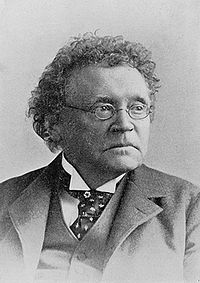
Francis James Child (February 1, 1825 – September 11, 1896) was an American scholar,
educator and folklorist, best known today for his collection of English and Scottish
ballads now known as the Child Ballads. Child was Boylston professor of rhetoric and
oratory at Harvard University, where he produced influential editions of English
poetry. In 1876 he was named Harvard's first Professor of English, a position which
allowed him to focus on academic research. It was during this time that he began work
on the Child Ballads.
Child's work The English and Scottish Popular Ballads was published between 1882 and 1898, at first in ten parts (the tenth, posthumously) and then in five quarto volumes. It was for a long time the authoritative treasury of the subject. The "English" and "Scottish" of the title notwithstanding, it was an international piece of research, with references that include thirty different language sources. While Child was primarily a literary scholar with little interest in the music of the ballads, his work became a major contribution to the study of English-language folk music. Further research into traditional ballads was conducted by Bertrand Bronson whose book Traditional Tunes of the Child Ballads was published by Princeton University Press in four large volumes between 1959 and 1972. The material for Child's book was mostly derived from texts in previously published books. Most of the ballad texts were derived from The Reliques of Ancient English Poetry (sometimes known as Reliques of Ancient Poetry or simply Percy's Reliques), a collection of ballads and popular songs collected by Bishop Thomas Percy and published in 1765. |